
QuickBooks Error Code C 19
Let’s Dive in to see…
How to Fix QuickBooks Error Code C=19
QuickBooks C= Series Error · Internal Assertion Failure
How to Fix QuickBooks Error C=19
QuickBooks displays an unrecoverable error with code C=19 — typically during data operations, printing, or when QB's internal checks detect an unexpected program state.
C=19 is a program-level assertion failure — QB's own code detected an internal state that shouldn't be possible. Unlike most C= errors which indicate company file corruption, C=19 often means the QB application itself encountered an unexpected condition. At QuickFix Bookkeeping, C=19 is frequently resolved by updating QB — many C=19 instances are version-specific bugs where QB's assertion was too strict and was relaxed in a later release.
The QuickFix Bookkeeping Distinction — C=19 Is Often a QB Bug, Not File Damage
C=19 differs from most C= errors because it can appear with a completely healthy company file — the QB program itself is the source of the failure.
C=19 — program assertion failure
QB's code hit an unexpected internal state — its own assertion check failed. May occur with healthy company files. First step: update QB. Many C=19 errors are fixed in point releases without touching the company file.
C=47, C=43, C=224 — file corruption
Company file data is actually damaged — a specific record, transaction, or pointer is corrupted. Updating QB won't fix these — they require Rebuild, File Doctor, or backup restore.
How to tell if C=19 is a bug or file damage: Update QB to the latest release → run Verify Data. If C=19 disappears from QBWin.log after the update and the file Verify is clean: it was a version-specific bug. If C=19 persists in QBWin.log after updating and is tagged LVL_SEVERE_ERROR or is accompanied by other C= errors (C=47, C=43, etc.): the company file also has damage that needs repair. The update tells you which scenario you're in within minutes.
What Causes QuickBooks Error C=19?
Version-Specific QB Bug
Primary C=19-specific cause — an assertion in QB's code for a specific version is too strict and fires on valid data that the assertion incorrectly considers invalid. Intuit releases point updates (e.g., R5 to R6 for QB 2024) that relax or fix incorrect assertions. Updating to the latest release for your QB year version resolves these version-specific C=19 errors without touching the company file.
Data Edge Case Beyond QB's Expected Range
A specific transaction or record has a value that's technically valid but outside what QB's assertion expected — for example, an unusually large transaction amount, a transaction with an unusual combination of account types, or data imported from a third-party app that uses values QB's assertions didn't anticipate. The assertion fires not because the data is wrong, but because QB's validation was too narrow.
Company File Corruption Alongside C=19
When C=19 appears alongside other C= errors (C=47, C=43, C=224) in QBWin.log, the assertion failure may be triggered by the corrupted data — QB's internal checks hit the corrupted record and trip the C=19 assertion. In this case, fixing the file corruption (via Rebuild or restore) also clears the C=19. C=19 alone in QBWin.log is more likely a bug; C=19 with other codes is more likely file-damage-driven.
Third-Party App Integration Issue
Third-party apps that write data directly to QB (payroll processors, CRM integrations, POS systems) can create records with values QB's built-in C=19 assertion doesn't expect. When QB encounters this data during Verify or normal operations, the assertion fires. Disabling the integration temporarily and running Verify can confirm if the integration is the trigger.
QB Installation Issue
A damaged QB installation can cause internal assertion checks to fail because the program files themselves are incomplete or corrupted. Running the QB Install Diagnostic Tool or performing a clean reinstall restores the program files to their correct state, eliminating installation-related C=19 errors.
Overflow or Boundary Value in Transactions
Transactions with amounts near QB's maximum values, accounts with balances approaching the maximum displayable amount, or date values at unusual boundaries can trigger C=19 assertions that were programmed to catch overflow conditions. These may appear alongside overflow-related errors in QBWin.log.
How to Fix QuickBooks Error C=19
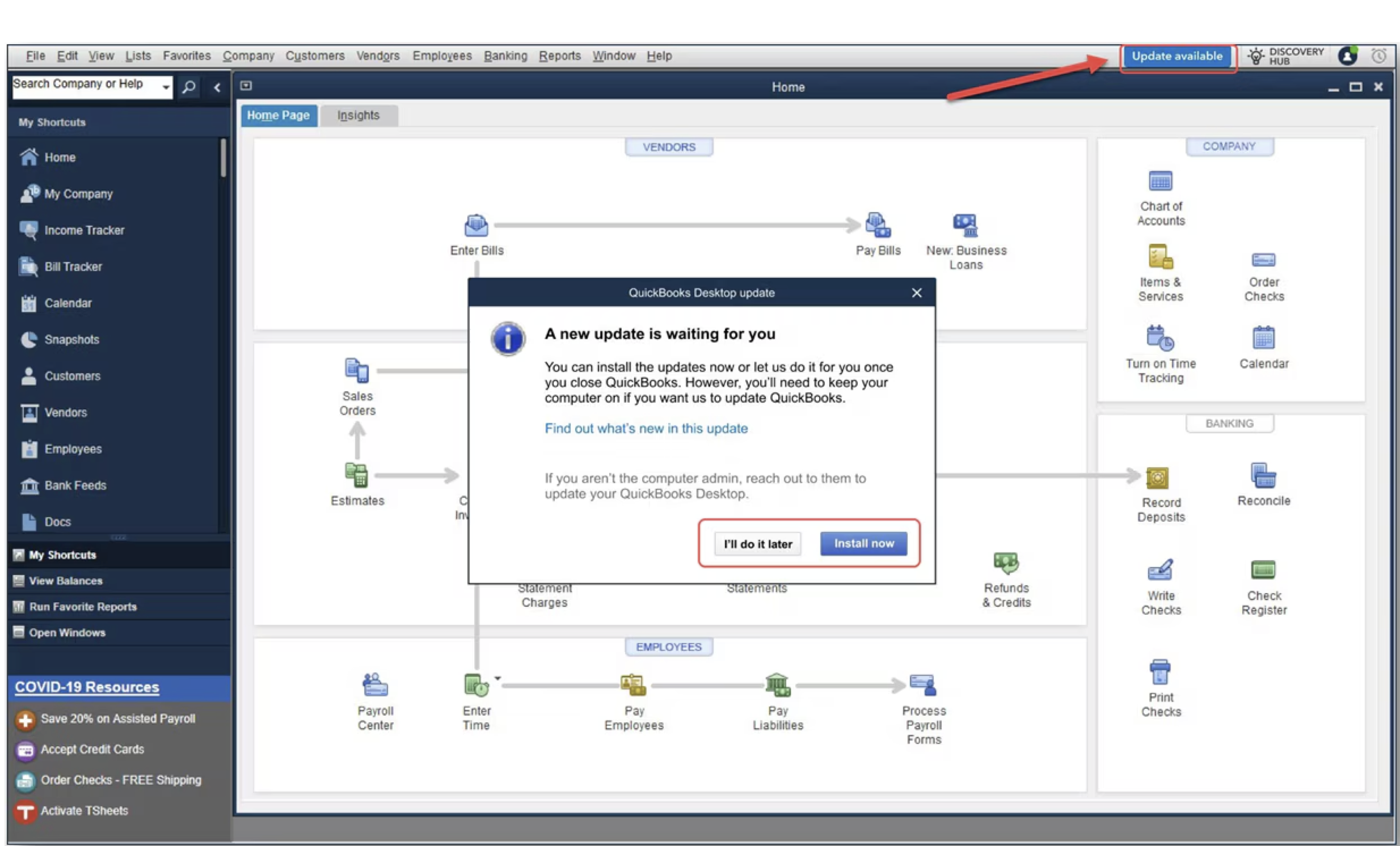
Update QB first — this resolves C=19 faster than any other step when it's version-specific.
Frequently Asked Questions
Related QuickBooks Errors
C=19 Persisting After Updating QB and Running Rebuild?
Let QuickFix Bookkeeping Identify the Triggering Record.
Persistent C=19 after updating QB and Rebuild means the QBWin.log Verify Target points to a specific data edge case that needs hands-on identification and repair — we locate the exact record and resolve the assertion trigger without data loss.
Book a Free 30-Minute ConsultationNo obligation. Same-day response.