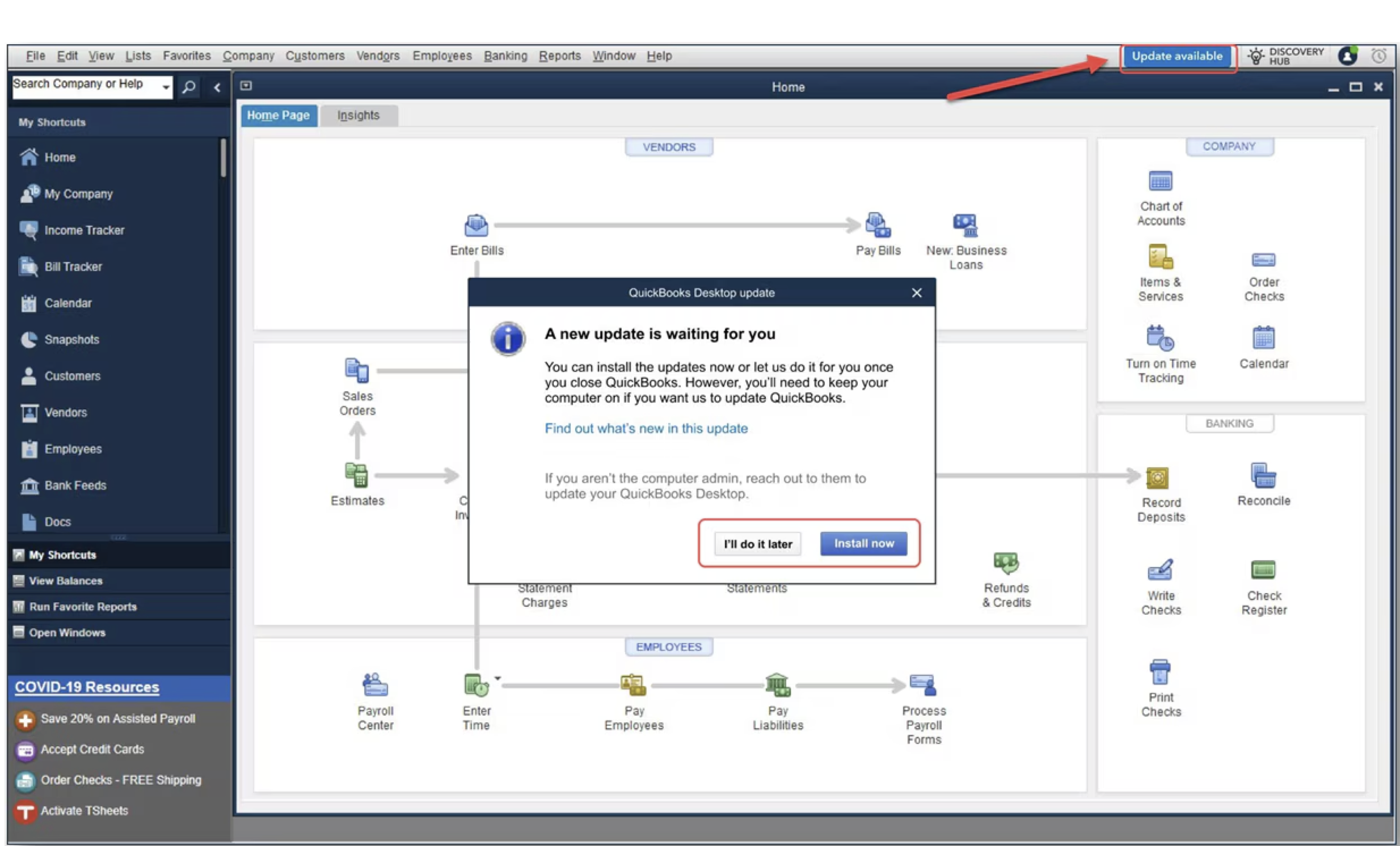
QuickBooks Windows Installer Error Guide
How to Fix QuickBooks Error 1601
You went to update QuickBooks — something you have done dozens of times — and this time it stopped. An error appeared on screen: Error 1601: Windows Installer is not accessible. Or perhaps the message read: Error 1601: There was a problem installing Microsoft .NET Framework.
Two different messages. Same error number. Two different problems. At QuickFix Bookkeeping, this is one of the first things we check — because the fix for one has almost nothing to do with the fix for the other, and most guides out there do not make that distinction at all.
The QuickFix Bookkeeping Distinction
Error 1601 has two completely different error messages — and they require different fixes.
Message A
"Error 1601: Windows Installer is not accessible"
The Windows Installer service — the Microsoft engine that handles all software installations on your PC — is either stopped, unregistered, or corrupted. The fix is in Windows Services and the Windows Installer registration.
Message B
"Error 1601: There was a problem installing Microsoft .NET Framework"
The Microsoft .NET Framework component QuickBooks depends on is either missing, corrupted, or toggled off in Windows features. The fix is in the .NET Framework installation and Windows components settings.
Read your error message carefully before proceeding. Note which version you are seeing — this determines whether you start at Method 1 or Method 4. Running the wrong fix wastes time and occasionally makes things harder to resolve.
What Is QuickBooks Error 1601?
Error Code
1601
QuickBooks Desktop only
Windows Installer / .NET issue
What it means in plain English
Error 1601 is QuickBooks telling you that a core Windows component it relies on to install or update itself is not working properly. It is not a problem with your company file, your accounting data, or QuickBooks itself — it is a problem with the environment QuickBooks is trying to install into.
Your financial data is safe. The error sits entirely within the installation and Windows component layer — and in the vast majority of cases it is resolved without needing to reinstall QuickBooks from scratch.
📌
Error 1601 is Related to Errors 1603 and 1642
Intuit groups errors 1601, 1603, and 1642 together in their official documentation because they all stem from the same Windows Installer and .NET component issues. If you have seen any of these three codes, the causes and fixes overlap significantly. Resolving 1601 correctly will often prevent 1603 and 1642 from appearing as well.
What Causes QuickBooks Error 1601?
The causes map directly to the two message types. Knowing which applies to your situation determines exactly which fix to run first.
Message A — Windows Installer causes
⚙️
Windows Installer Stopped
The Windows Installer service has been disabled or stopped — either manually, by a system policy, or by a third-party application that changed service settings during its own installation.
🔧
Unregistered Installer
The Windows Installer executable has become unregistered from the system — meaning Windows no longer knows where to find or how to run it. This typically follows a failed software uninstall or a corrupted Windows update.
🛡️
Antivirus Interference
Security software blocks the Windows Installer service from running or quarantines installer files during the QuickBooks update process — treating them as a potential threat.
🪟
Outdated Windows
A Windows version that is significantly behind on updates — particularly Windows 10 or 11 — may carry an outdated Windows Installer version that is incompatible with the QuickBooks installer being run.
🔒
Insufficient Permissions
Running the QuickBooks update or installation without administrator rights means Windows blocks the installer from accessing system directories it needs to modify during the update process.
🦠
Malware Damage
A virus or malware has damaged the Windows Installer service files — either directly targeting them or as collateral damage from a broader system infection. Running a full malware scan before troubleshooting is always worthwhile.
Message B — .NET Framework causes
📦
Corrupted .NET Framework
One or more versions of Microsoft .NET Framework — which QuickBooks depends on to run installation routines — have become corrupted, partially installed, or are missing key components from the Windows features list.
❌
.NET Disabled in Windows
The required .NET Framework version has been unchecked in Windows Features — either deliberately by a system administrator or accidentally during a software cleanup. QuickBooks cannot install without it being active.
How Error 1601 Shows Up — What You Are Experiencing
01
QuickBooks update stops and rolls back
The most common trigger — you click Update QuickBooks, the progress bar moves partway, then the entire process reverses and the error appears. The update is never successfully applied.
02
Fresh QuickBooks installation halts mid-way
If you are installing QuickBooks for the first time or reinstalling it, the setup progress stops at a specific point and exits with the 1601 code — leaving QuickBooks either partially installed or not installed at all.
03
QuickBooks opens but certain features do not work
When Error 1601 occurs during an update rather than a fresh install, QuickBooks may open but run on a partially updated version — causing specific features, payroll tables, or bank feed components to malfunction.
04
System performance slows noticeably
Before or after the error appears, Windows may slow down significantly — particularly when QuickBooks is open. This is a sign that Windows Installer or .NET components are consuming resources trying to resolve an unfinished installation state.
05
Error repeats every time you attempt an update
Error 1601 is consistent — if the underlying cause is not fixed, the error will appear every single time you attempt to update or install QuickBooks. Simply retrying the update without fixing the root cause will always produce the same result.
How to Fix QuickBooks Error 1601 — Step by Step
Methods 1 through 4 address Message A (Windows Installer). Methods 5 and 6 address Message B (.NET Framework). Go directly to the section that matches your error message.
MESSAGE A
Windows Installer Fixes — "Windows Installer is not accessible"
METHOD 1
Restart the Windows Installer Service
Try this first — 3 minutes
The Windows Installer service may simply be stopped or set to disabled. Restarting it manually is the fastest possible fix and resolves the error immediately when this is the cause — no tools required.
1
Press Windows + R to open the Run dialog. Type services.msc and press Enter. The Windows Services window opens.
2
Scroll down the list to find Windows Installer. Right-click it and look at the status. If it shows Stopped — click Start. If it shows Running — click Restart.
3
Double-click Windows Installer to open its properties. Under Startup type — ensure it is set to Manual (not Disabled). Click Apply then OK.
4
Close Services. Open QuickBooks and attempt the update again. If it proceeds without error, the service status was the cause and you are done.
METHOD 2
Re-register the Windows Installer
Fixes unregistered installer
If the Windows Installer service is running but the error persists, the installer executable itself may have become unregistered. Two Command Prompt commands force Windows to re-register it completely — this is a safe operation that takes under a minute.
1
Click the Windows Start button and type cmd. Right-click Command Prompt and select Run as Administrator. Click Yes when prompted.
2
Type the following command and press Enter: msiexec.exe /unregister
Wait for it to complete — the screen may briefly flash.
3
Now type this second command and press Enter: msiexec.exe /regserver
This re-registers the Windows Installer with the system.
4
Close Command Prompt. Restart your computer. Open QuickBooks and attempt the update again.
QuickFix tip: These two commands are completely safe — they do not delete or modify any data. If you receive a message saying "the command completed successfully" with no output, that is normal and correct. The re-registration has worked.
METHOD 3
Disable Antivirus and Run QuickBooks Install Diagnostic Tool
If antivirus is blocking installation
If Methods 1 and 2 did not resolve the error, antivirus software is likely intercepting the Windows Installer mid-process. Combining a temporary antivirus pause with the QuickBooks diagnostic tool gives the installation a clean, unobstructed run.
Important: Only disable antivirus for the duration of this process. Re-enable it immediately once the tool has finished running and the update is complete.
1
Open your antivirus software and temporarily disable real-time protection. Check the quarantine folder for any recently blocked QuickBooks or Windows Installer files and restore them if found.
2
Download QuickBooks Tool Hub from Intuit's official website. Open it → click Installation Issues → select QuickBooks Install Diagnostic Tool. Let it run to completion — approximately 15 to 20 minutes.
3
Restart your computer once the tool completes. Re-enable your antivirus immediately. Then add QuickBooks to your antivirus exclusions list to prevent this from recurring on future updates.
4
Open QuickBooks and attempt the update again. In most cases, the combination of the diagnostic tool and clean installation environment resolves Error 1601 at this stage.
METHOD 4
Run Windows Update and Use Quick Fix My Program
Update Windows, then fix QB
An outdated Windows version carries an outdated Windows Installer. Updating Windows resolves the underlying incompatibility — and the Quick Fix My Program tool in Tool Hub then repairs any QuickBooks components left in a broken state by the failed updates.
1
Go to Windows Start → Settings → Windows Update → Check for Updates. Install all available updates including optional ones. Restart when prompted.
2
Once Windows is fully updated and restarted, open QuickBooks Tool Hub → click Program Problems → select Quick Fix My Program. Let it run and complete.
3
Restart your computer after the tool completes and attempt the QuickBooks update again. A fully updated Windows paired with a repaired QuickBooks program resolves the vast majority of persistent 1601 cases.
QuickFix tip: At QuickFix Bookkeeping we always check Windows Update status as part of any QuickBooks error diagnosis. Clients are often surprised to find their Windows installation is 6 to 12 months behind on updates — which creates a cascading set of compatibility issues that go well beyond QuickBooks alone.
MESSAGE B
.NET Framework Fixes — "There was a problem installing Microsoft .NET Framework"
METHOD 5
Enable or Repair .NET Framework in Windows Features
Most common fix for Message B
The required .NET Framework version is often simply toggled off in Windows Features — or needs to be cycled off and back on to repair a corrupted state. This is a two-minute process that resolves Message B in the majority of cases.
1
Press Windows + R, type optionalfeatures and press Enter. The Windows Features panel opens.
2
Locate .NET Framework 3.5 (includes .NET 2.0 and 3.0) and .NET Framework 4.8 Advanced Services (or the highest version available).
If either is unchecked: tick the checkbox → click OK → restart when prompted.
If both are already ticked: untick .NET Framework 3.5, click OK, restart, then reopen Windows Features and tick it back on. This forces a repair cycle.
3
After restarting, open QuickBooks and attempt the update again. The .NET repair cycle resolves Error 1601 Message B in the majority of cases.
QuickFix tip: The toggle-off-and-on cycle is not intuitive — most people assume that if .NET is already checked, it must be working. But a checked box does not mean the files are intact. The cycle forces Windows to verify and reinstall the component files, which is exactly what is needed when .NET is partially corrupted without being fully disabled.
METHOD 6
Download and Reinstall .NET Framework from Microsoft
For deeply corrupted .NET
If the Windows Features toggle cycle did not resolve the issue, the .NET Framework files are too corrupted for a simple toggle to repair. A fresh download and reinstall from Microsoft directly provides clean, uncorrupted files.
1
Go to Microsoft's official .NET Framework download page (search Microsoft .NET Framework download on the Microsoft website). Download both .NET Framework 3.5 and the latest version of .NET Framework 4.x available for your Windows version.
2
Run each installer as Administrator. Follow the on-screen steps and let both complete fully before proceeding.
3
Restart your computer after both installations are complete. Then open QuickBooks and attempt the update again.
Quick Reference — Which Fix For Your Situation?
| Your error message says |
Your situation |
Start with |
| "Windows Installer is not accessible" |
Service stopped or not running |
Method 1 — restart service |
| "Windows Installer is not accessible" — service was already running |
Installer unregistered |
Method 2 — re-register |
| Error after antivirus updated or new AV installed |
AV blocking installer |
Method 3 — disable AV + tool |
| Windows has not been updated in months |
Outdated Windows Installer |
Method 4 — Windows Update |
| "Problem installing Microsoft .NET Framework" |
.NET toggled off or corrupted |
Method 5 — toggle .NET |
| Method 5 did not resolve the .NET error |
Deeply corrupted .NET files |
Method 6 — reinstall .NET |
Frequently Asked Questions About Error 1601
Will my QuickBooks data be lost if Error 1601 is not fixed promptly?
No. Error 1601 is purely an installation and update error — it has no interaction whatsoever with your company file or financial data. Your .QBW file is completely safe regardless of how long the error persists. The only consequence of leaving it unresolved is that your QuickBooks version falls further behind on updates, which can eventually cause compatibility issues with payroll tables, bank feeds, and certain features that depend on current release files.
Can Error 1601 appear in QuickBooks Online?
No. Error 1601 is exclusive to QuickBooks Desktop. QuickBooks Online runs entirely in a browser and has no local installation files — Windows Installer and .NET Framework do not play any role in QBO. If you are experiencing an issue with QuickBooks Online, the error codes and resolution paths are entirely different.
Why does Error 1601 appear alongside errors 1603 and 1642?
Intuit officially groups errors 1601, 1603, and 1642 together because they all originate from the same two root causes — a damaged Windows Installer or corrupted .NET Framework. They appear in different sequence or combination depending on exactly which point in the installation process the failure occurs. Fixing the underlying Windows Installer or .NET issue resolves all three codes simultaneously in most cases.
Is it safe to unregister and re-register the Windows Installer?
Yes — completely safe. The msiexec /unregister and /regserver commands only affect the registration entry that tells Windows where to find the Installer executable. They do not delete any files, modify any data, or affect any installed programs. The only thing that changes is the registry pointer — which is immediately restored by the /regserver command. At QuickFix Bookkeeping we use this fix regularly and it has never caused any secondary issues.
How do I stop Error 1601 from coming back after future updates?
Three habits prevent recurring Error 1601. First, keep Windows fully updated — an up-to-date Windows Installer is less likely to have compatibility issues with new QuickBooks releases. Second, add QuickBooks to your antivirus exclusion list after resolving the error — this prevents security software from blocking installer files during future updates. Third, always run QuickBooks updates from an administrator account rather than a standard user account. At QuickFix Bookkeeping we include these three configurations as standard practice whenever we set up or repair a QuickBooks Desktop installation for a client.
Related QuickBooks Installation Errors
Error 1601 belongs to the 16xx family of QuickBooks installation errors. If you have resolved 1601 but are still experiencing installation issues, these guides cover the most closely related ones:
Six Methods and Still Seeing Error 1601?
Time to Hand It to a
Certified QuickBooks ProAdvisor
Certified Intuit ProAdvisors · QuickBooks Desktop Specialists
When Error 1601 persists beyond standard troubleshooting, it usually points to a deeper Windows system conflict — registry corruption, a failed Windows component stack, or a persistent antivirus policy that standard methods cannot override. At QuickFix Bookkeeping, our certified ProAdvisors resolve QuickBooks Desktop installation and update errors daily. We identify the exact cause, apply the right fix, and configure your system to prevent it from recurring — without putting your financial data at risk.
Book a Free 30-Minute Consultation
No obligation. Same-day response. Your data stays safe throughout.